
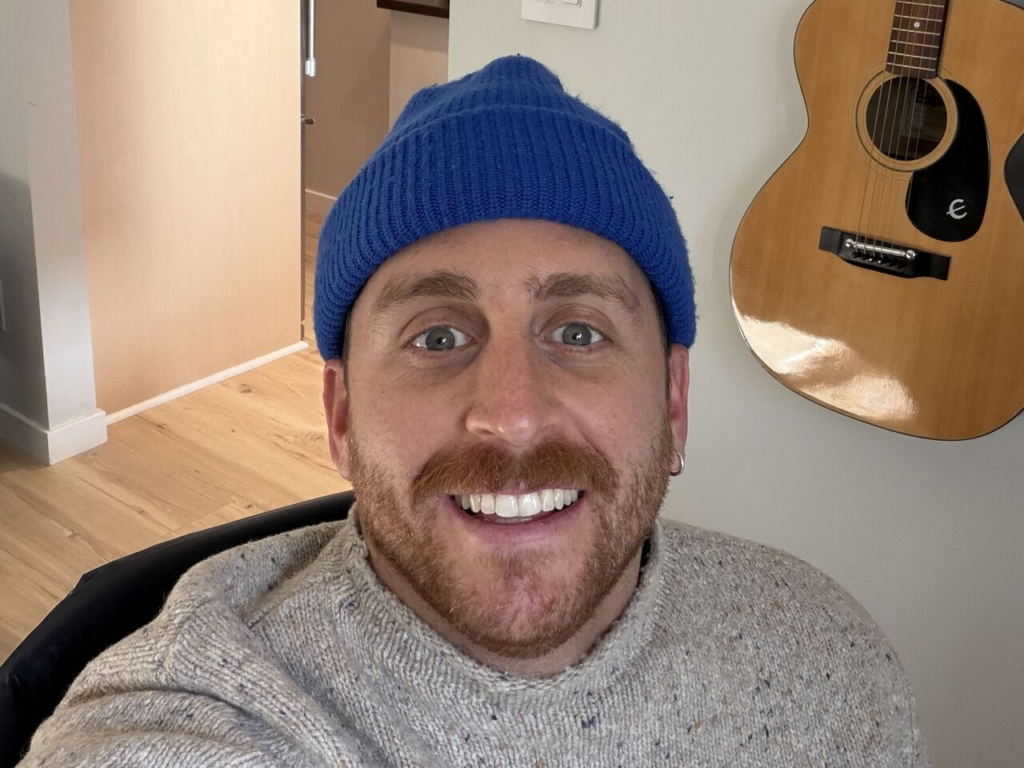
Success and suffering aren’t opposites. Sometimes, they’re roommates.
2025 was the best year of my life. And simultaneously, the worst. If you’re a founder reading this, you probably know exactly what that paradox feels like—the kind of year that looks incredible on LinkedIn but feels unsustainable in your body.
I bought a house. Remodeled the entire basement myself. Started dating the love of my life, Meghan—a relationship that fundamentally changed how I see everything. Boostcous went from idea to real brand with real sales on real shelves. KnoCommerce had one of our best years yet.
On paper, 2025 looks like a “crushing it” year. The kind people screenshot and brag about in founder forums and startup Twitter threads.
But here’s the part that didn’t make it into any highlight reel.
Table of Contents
The Hidden Cost of Hustle Culture
I broke my back. Spent three months on crutches. During this time, I slid into the worst shape of my life. Sleep wrecked. Energy wrecked. Head noisy with the constant chatter of unresolved stress.
And instead of slowing down—instead of listening to what my body was literally screaming at me—I did the thing founders are taught to do: I doubled down on work.
80–100 hour weeks became my normal. All-in on Kno. All-in on Boostcous. Zero-in on me.
Somewhere in that blur of Slack notifications and growth metrics, “Bar the human” quietly got replaced by “Bar the founder.” My entire identity collapsed into a series of business questions:
-
How’s MRR?
-
How’s the launch?
-
How are Shopify sales?
-
What’s the next thing?
It’s the same story a lot of us are living. We just don’t usually post about it. We share the wins, the funding rounds, the product launches—but rarely the cost of achieving them.
When Your Body Forces You to Listen
Breaking my back wasn’t just a physical injury. It was a wake-up call I couldn’t ignore, no matter how many browser tabs I had open.
Physical pain has a way of cutting through the noise of ambition. When you’re on crutches, you can’t pretend everything’s fine. You can’t hustle through it. You’re forced to confront the reality that you’re a human being with limitations, not just a productivity machine designed to hit quarterly targets.
The irony? While my body was breaking down, my businesses were growing. Which created a dangerous feedback loop: if growth is happening while I’m destroying myself, maybe that’s just the price of success?
That’s the lie we tell ourselves in startup culture. That burnout is a badge of honor. That self-sacrifice equals dedication. That if you’re not working 100-hour weeks, you’re not serious about your vision.
Redefining Success: My 2026 Framework
So going into 2026, I’m done optimizing only for revenue. I’m done treating my body like it’s an obstacle to productivity instead of the foundation that makes everything else possible.
My word of the year is Balance.
Not the fake “work-life balance” we put on investor slides. Not the performative self-care that’s really just another productivity hack. Actual, nervous-system-level balance that prioritizes sustainable human performance over unsustainable business metrics.
For me, that looks like a few simple, non-negotiable rules:
-
Work out outside 3 days per week. Skiing, biking, hiking—whatever it takes to reconnect with my body in natural spaces where there’s no WiFi and no metrics to track.
-
Be in the gym at least 2 days per week. I want my back to come back stronger than ever after this injury. Recovery isn’t just about healing; it’s about building resilience.
-
Meditate 4 days per week. Just 10 minutes of not solving problems. Not optimizing. Not strategizing. Just being.
That’s it. Three simple commitments that aren’t about business growth—they’re about human sustainability.
The Math That Actually Matters
Here’s what I’ve realized: if I keep running 80–100 hour weeks, Boostcous and KnoCommerce might continue to grow. But I won’t. Not in any meaningful sense.
And that’s not a trade I’m willing to make again.
The math is simple but easy to forget when you’re deep in founder mode: A burned-out founder eventually becomes a bottleneck to the business they’re trying to grow. Sustainable business growth requires a sustainable founder.
You can’t pour from an empty cup. You can’t lead from a depleted nervous system. You can’t make clear strategic decisions when your body is in chronic stress mode.
Lessons From Both Sides of the Year
So yes, 2025 was the best and worst year of my life. And I’m genuinely grateful for both sides.
The wins showed me what’s possible. They proved that I can build meaningful businesses, create real value, and attract incredible people like Meghan into my life. They demonstrated that the vision I have for my companies isn’t just a fantasy—it’s achievable.
But the pain showed me what’s not sustainable. It revealed the hidden costs of relentless ambition without boundaries. It taught me that success without health isn’t really success at all—it’s just delayed failure.
Both lessons are equally valuable. The wins without the pain would have made me arrogant. The pain without the wins would have made me bitter. Together, they created the clarity I needed to move forward differently.
Earlier this year, I spent 18 days completely offline on a river trip. I wrote about that experience in 18 Days Offline.
Moving Forward: Same Ambition, Different Approach
Next year, I’m bringing the same ambition. The same companies. The same problems to solve. The same vision for what Boostcous and KnoCommerce can become.
But I’m approaching those challenges as a whole human being, not just a founder. I’m bringing balance into how I tackle those problems.
This isn’t about working less hard. It’s about working more sustainably. It’s about recognizing that the most valuable asset in my business isn’t my technology stack, my marketing strategy, or even my product—it’s me. And if I don’t take care of that asset, everything else eventually falls apart.
To every founder reading this who resonates with the “best and worst year” paradox: you’re not alone. The pressure to constantly optimize, grow, and scale is real. But so are your human limitations.
It’s also why I started hosting DTSki—a chance to connect with other founders who understand this struggle.
Balance isn’t weakness. It’s wisdom. It’s choosing to build a business that can last because you’ve built a life that can sustain it.
Here’s to 2026—may it be a year of sustainable growth, for our businesses and ourselves.